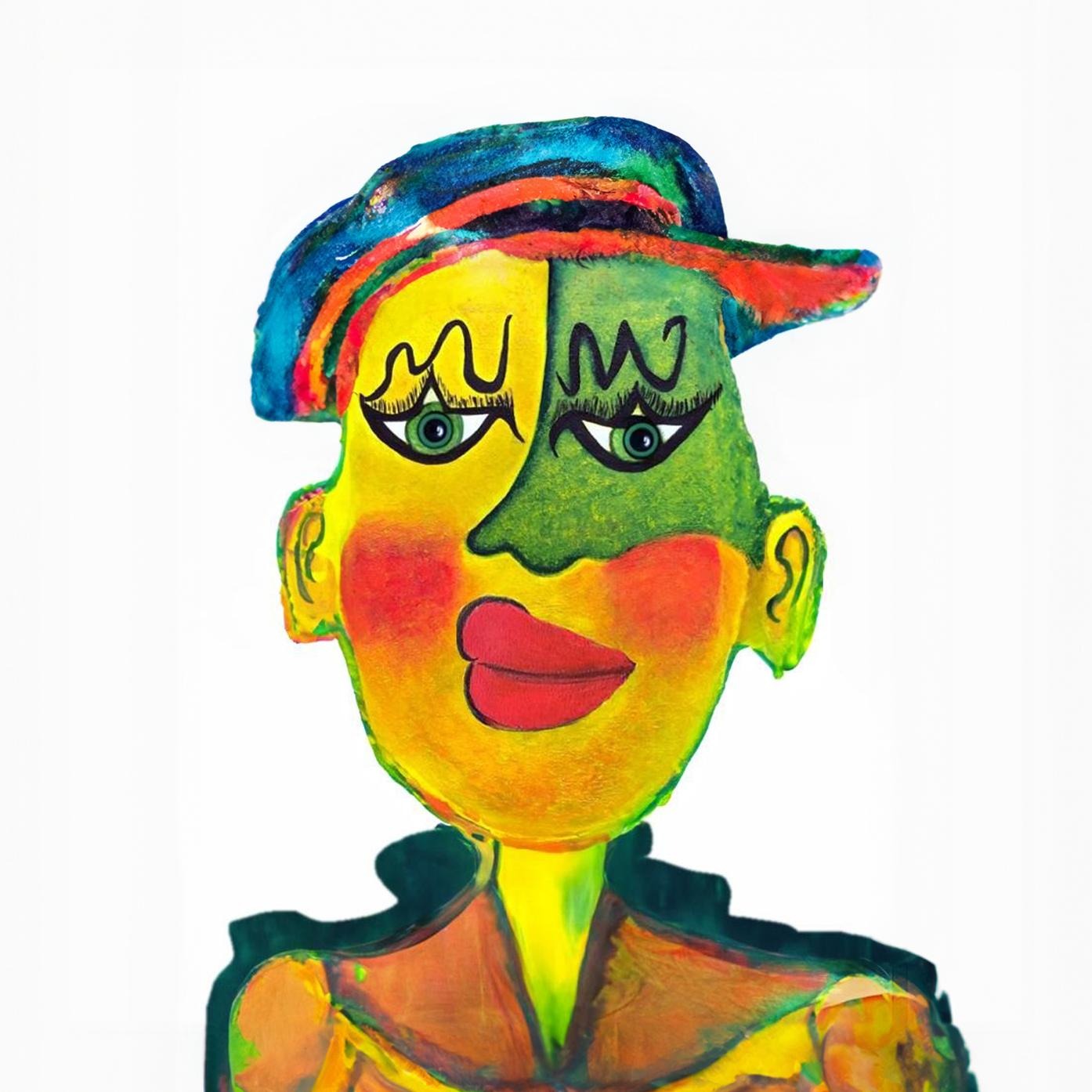
The Wild Dance Man
Finding truth in the performance.
I didn’t expect to spend my evening in a barn, but here I am, surrounded by stiff-backed spectators and the musty scent of aged wood. In the centre of the room is a lady in a silky black dress who sings with a deep, melancholic opera voice. Not too far from her is a pianist with a short haircut, all in black, moving his fingers on a piano but we can barely see him; he’s sitting behind a beam, blinding us with the annoying light he needs to read the score.
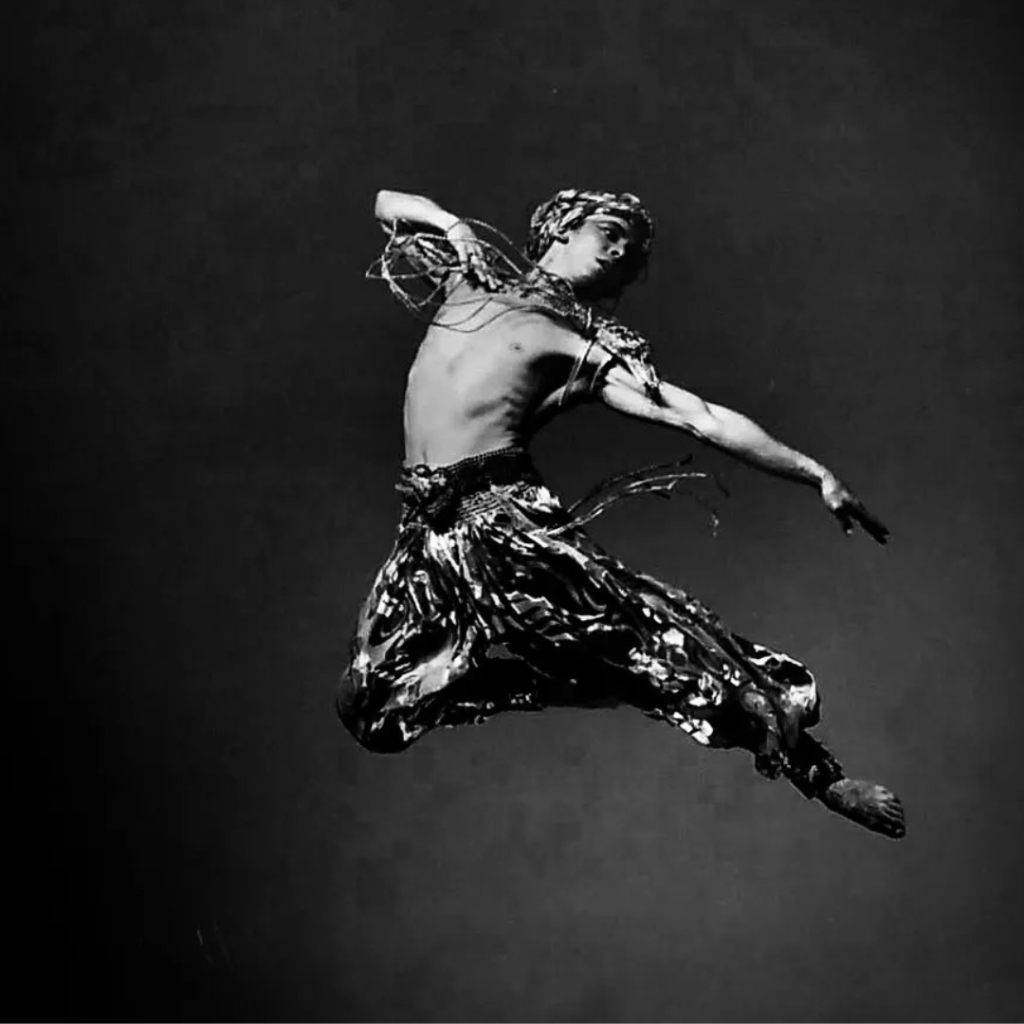
On his right is a young man wearing a vest and black trousers, standing in a large pot. He has long brown frizzy hair and moves his bare arms in a circular fashion with his back to us, like a dancing plant. Most of his legs are hidden in the pot’s earth.
Modern dance. Sometimes it’s a revelation; other times, it’s a long buildup to nothing. I can be a fan if it’s well-produced with smart lighting, trippy music, fast rhythms, and truthful dancers.
This young man in the pot is, at first, boring; I feel like a fool watching a circus that pretends to be something more.
Then he steps out, bare feet leaving the earth behind. His oversized trousers nearly swallow his feet, the hem dragging as he turns to reveal a dirt-stained brown patch on his behind. I can’t help but smile; the pot’s earth has left its mark.
He approaches us timidly at first, hair falling across baby-blue eyes. After getting acquainted, the dancer shows us he can stretch his legs real high. His long hair often covers his face as he moves. Everything that hides in the shadows and doesn’t reveal itself under harsh lights becomes more enticing because there’s a mystery to it. This dancer’s got it all figured out.
I want to tell him to show me something fresh, someone I haven’t already met. I don’t want him to be another fake artist who just does it for money. I want to get to his heart and his soul; I want to get close enough to feel what he feels when he’s creating.
The dancer starts to move gently, like a flower in the wind. The youngest couple in the room exchanges loving looks. He’s about to go on an adventure; it seems he’s searching for something.
Then he gets close to a few clean-shaved intellectuals with round glasses and no belly — too close. As he lifts his arms around them and crawls to their leather loafers, some smile weakly; others suddenly can’t see much through their spectacles as the lenses steam up.
He rolls his head between his arms and folds his body into all kinds of compromising positions. How much time did he spend rehearsing for this?
I check the event invitation again. The dancer has no bio next to his picture, only a sentence taken straight from his mouth: “When I become a kid inside, I make people happy.”
Slightly presumptuous — but he does make me think of a wild child expressing himself without borders.
The dancer hops into an alcove just above and behind a spectator’s head, who hastily grabs the wine glass he’d left up there to save it from the performer. The dancer plays with the small space, rubbing his back against it like a cat, staring out at all of us from his nook. His eyes seem elsewhere, like he’s seeing something we can’t.
Then he’s back on the floor. No more hide-and-seek; he’s ready for us. His movements become sexual. Some older folks tense with discomfort. An ape sound comes from his mouth — a great trick; the weirder the better. The animalistic side of him could wake the animals within us.
He’s trying to rouse the little child in all of us too — the one who plays without caring about consequences, who misbehaves and laughs and runs around with no other motive than being a naughty kid who pisses grown-ups off because he wants attention.
Sometimes the dancer looks like God, shining light on all of us; other times he looks dominated by a dark force. It depends on the music, and how he moves to it.
All types of artists are out there. Some think they have to express themselves in the loudest way to have an impact. But it doesn’t take a genius to scream, and those who scream are not always the most talented. Some show you all of their essence and express something so deep you can’t remain indifferent; they often leave a haunting sense of how tortured they feel inside — those are the ones I like.
Artists can wield emotions so powerfully they lead you to believe anything, steering your feelings, making you their puppet. Their talent lies in convincing you they’re the character they display.
I want truth. It’s difficult to assess when it’s genuine with performers, since they know how to entertain and how to manipulate emotion.
I look at the young man more closely. Maybe he’s not repeating a choreography. Maybe he’s just doing what feels good to him in the moment.
All of a sudden, the pianist ceases to play. He gets up, grabs a rope, and walks in a determined way toward the dancer. What’s the rope for? Is he going to punish him? Maybe he’s tired of playing in the background.
The pianist wraps the rope around the dancer’s chest and ties him to a block of cement, which he drops on the floor. What follows is a slow, uneventful series of movements — the artist’s struggle to free himself from the weight of his own actions.
Then the pianist plays a dark piece, and the rope comes undone. The dancer moves fast, so fast that every inch of his body becomes different to the eye each time it changes. He seems possessed again, moving forward, looking up, above our heads, into the eyes of someone we can’t see. As the music intensifies, so does he; at last he becomes more than a performance — he feels real. He’s expressing what he feels inside. He and the sound become one entity.
His emotions explode. The dancer fights something we can’t see, with his hands and his chest; his legs struggle to keep it together. He looks fragile, and that has its charm. Something gives up inside him; he loses balance, stumbles forward, and falls to the ground.
He lands on his stomach, his arm trying to pull him back up. I can see the desire in him to save himself, but he’s controlled by something invisible that’s killing him. His feet try to help him stand, but he can’t. He moves back against the wall of the barn, using his arms to escape his killer; they look at each other one last time, until the dark force wins and he folds his hands in prayer.
The music ends. I’m distraught; I look at the pianist with desperation. Please play another song. Don’t kill him off. Save him. Allow him to get up and change. Don’t leave me with reality’s sour taste.
The pianist and I stare at each other for an eternal minute. He’s about to rise and give the signal that we should clap, because it’s over — I can feel it. My eyes water. He gets up and bows. My heart breaks into fragments.
His eyes meet mine for half a second, then lower to the keys. He sits back down. My mouth opens as I hang on his every move. His fingers rest on his thighs. Will he move them back where they belong?
The pianist sighs and lets his heart take over. His hands start playing again — more beautifully than before, stronger than before, with a new power: the power of redemption, of good over evil. The dancer rises. Each note pulls him from the ground, animating every cell in his body.
The wild dance man returns to the pot, watering himself like a reborn flower. He’s back on earth, grounded, where he belongs. He explored, he made mistakes, he fell — and now he’s reborn.
The music stops, and the dancing with it. All the spectators get up, roaring with applause. I try to as well, but I’m too overwhelmed.
“What a peak!” a woman shouts, her face betraying nothing but wide, hungry eyes.
Another ecstatic voice echoes her: “What a whirlwind!”
They talk to each other to say nothing. Everyone has kind words; their reactions are measured, their phrases carefully chosen, the way they are at an opera. The show must continue. Those who’ve been invited are part of it, and they must be as grand and as subtle as the artists.
I smile to the host, thank her, and step out into the night.
