What We Applaud
On power, performance and silence.
Here I go, diving into Mexico City’s Franz Meyer Museum. The most popular exhibition here comes from Japan and it costs extra to see it. The woman sold it to me at reception saying it came from London. It’s funny how seeing something that comes from a fancy country immediately convinces locals and tourists alike that it’s worth their time. If it was imported, it means it’s that great. Or is it?
I step in to find out.
There’s a queue to look at each piece. Ladies and gentlemen, have you ever been to an exhibition in which you’re queuing to see the artworks inside the museum? Isn’t that a bit excessive?
I decide to skip ahead and realise there was never a queue to begin with: a few people are just slow, and everyone else is copying.
We all moved like sheep, one behind the other. It reminds me of how easily we imitate behaviors we see without thinking.
The exhibition mentions Fukushima and health. None of the artworks appeal and every explanation is in Spanish.
My smile retreats until I see a big bubble seat — sparkling, gleaming blue, under the soft aesthetics of a manga movie projected in a dark room.
I ask one of the kids working for the museum some information about what to see next. The boy leaves an impression. The speed of his Spanish, how he looks left and right and centre and behind him again, in about seven seconds— is remarkable.
I head to the second floor, down a long corridor in a part of the museum that seems shut off to the public. That’s where the free exhibition is of Pierre and Gilles. Artists I’m not familiar with.
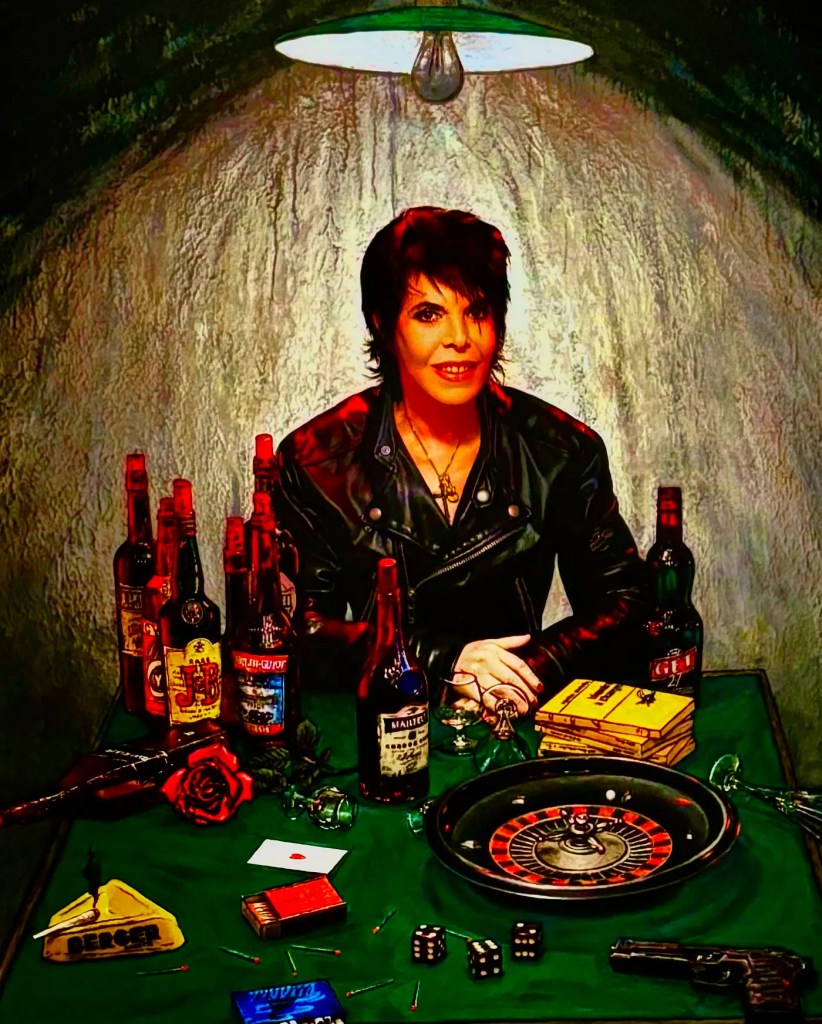
The series of portraits look like they’re about our modern societies’ glorification of masks and crooks.
There’s a gangster with booze, guns, cigarettes and a rose — glamorised. It makes me think about the violence threaded through the city, making the poorest poorer, in a cycle of dependence and misery they’ll never get out of. What will happen to its people — those who survive thanks to tourists, if visitors’ money is being chased away because of the increased risk the city carries?
An ancient chair hangs above my head, suspended in the air. A furniture exhibition is also in the room. Interesting that the curators chose to do that. Did they not have enough space to separate the chairs and the edgy portraits?
The only explanations placed on the walls are about the furniture. Why are they still talking about the chairs? Is it done intentionally to be subtle? Or maybe they purposefully wanted to attract those who prefer to stick to furniture than look at the real problems being slipped under the rug — the drug cartels. The lords of this country more powerful than the president, herself.
I finally find an explanation on Pierre and Gilles’ project. They focus on people and the role they play. The artists photograph notorious figures who play roles to have visibility and equity and discriminated members of society like gay people.
I recognize the actress Sophie Marceau crying in a sexy pyjama in some slums, wearing layers of makeup. There’s a broom in the background, but she’s not using it. She’s just sitting and posing, like a model, which opposes the poverty the picture should show, highlighting the staging of the photograph. The artwork plays with our expectations. The moment I identified her, everything else faded into the background. Isn’t that happening every day? We focus on fame without questioning what the popular people wearing the masks are doing.
Another artwork shows Batman, resembling a pole dancer, in a plastic costume. Big muscles, scratches of fights still visible on his skin. He makes me think of a little boy performing what he thinks a strong man should look like. Man and myth combined. A beautiful representation of someone playing a role, wanting to look like they can fight and take hits without crumbling. Don’t we all want to be a hero, a person everyone admires for their strength and self control?
One picture shows a lady’s tanned bikini body right next to the corpse of a woman getting excavated. What are the artists trying to say? If you can make it look attractive, you can hide anything — war, death, exploitation.
A gay man with tattoos looks like he’s about to sing in the rain, the glowing Eiffel Tower shining in the distance, sparkling like gold. The romantic look in his eyes and the old-fashioned lamppost he’s holding make me almost miss the hard-on in his shorts.
A family of four appears.
“So darling, what’s your favorite piece?” the dad asks one of his boys in the same leather jacket as him.
Laughter comes next — mocking laughter. The boy giggles, copying his dad. “None of them.”
The dad keeps giggling and looks back at me because I’m chuckling too now. He thinks I’m part of his club, but I’m not. I’m laughing at something else entirely. Mockery will never beat understanding.
I’d like to see an artist attempt to display all the roles people play in a single exhibition. You’d need a whole world to show them — on stage, under bright lights, encircled by earth and water.
Yes, I am talking about the earth.
