Would You Link The Dots?
Notes from the Whitney on truth, fame and the lives we don’t show.
I’m at the Whitney Museum of American Art in Manhattan, here for the Ken Ohara project, CONTACTS.
Visitors around me all move differently. Some have headphones, binoculars. We’re all sealed in our own bubbles.
More than a few rush through five-minute screenings. Others sit, text, take selfies. Young people are scarce. Are they too busy curating themselves?
Photographs turn on different parts of my brain. A bride stands behind metal bars while her family stares down, defeated. A fisherman looks past the camera, unsure what is being taken from him.
Graffiti of Zapata watched by modern punk women. Power above them wears a tuxedo. Rebellion survives as an image.
Older faces rooted, protective. Younger ones lighter, styled, Americanized. Fashionable glasses, haircuts, necklaces. What happens when you live between two antagonistic cultures? Do you become both, or something else entirely?
A newborn lies beside a beheaded animal. Death without taboo.
Guns. Snakes. Bodies washed ashore. Peace signs. Then surrender. Then guns again. Violence escalates when compromise fails. If you throw the first stone, there’s no return.
Gardens. A mermaid costume displayed for sale. Animals captive. Nature bearing our fingerprints. Eventually, humans disappear from the frame. Landscapes remain.
A little girl runs down steps in clean white socks while a man reads a book in the middle of the road. Two worlds pass without touching.
A hand plays with its shadow on a wall. A reach. A desire for connection.
Street moments feel like having front-row seats to something real.
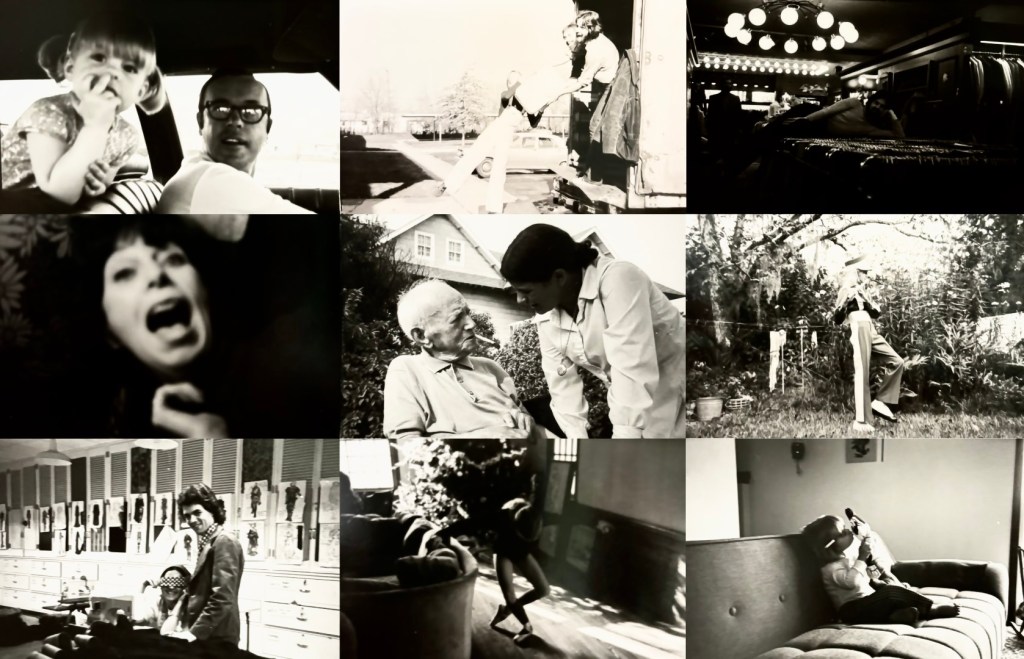
I reach the heart of the show: the photographic chain of letters Ken Ohara began. He trusted complete strangers, pulled from the phone book, to tell the truth with a camera — mailing them instructions and his own equipment, preloaded with film, so he could take a glimpse at their lives without interfering.
I move along the series of images laughing, smiling, going a little teary. He convinced strangers to share their private moments, and the photographs feel like a record of the present — a slow-motion film that leaves us space to interpret, testing how good we are at decrypting it.
Could we achieve the same thing today? The popularity of some social media platforms makes me want to say no. We tend to prefer shine over substance, the glamorous over the real. Is it because we’re just looking for a bit of magic in a world that offers us little?
But Ohara’s wall asks a quieter question. If I showed you specific sequences of my own day, would you link the dots? Would you get what I’m trying to say beyond the images? Would you trust the message once it had been transmitted?
And if millions of us photographed the key moments of our lives honestly, for others to see — not the curated version, would we reach the hidden corners we rarely show anyone? Would we develop a new kind of compassion for one another?
I don’t have the answer. But I leave thinking that the camera, in the right hands, is still one of the few instruments we have for understanding each other a little more.
